
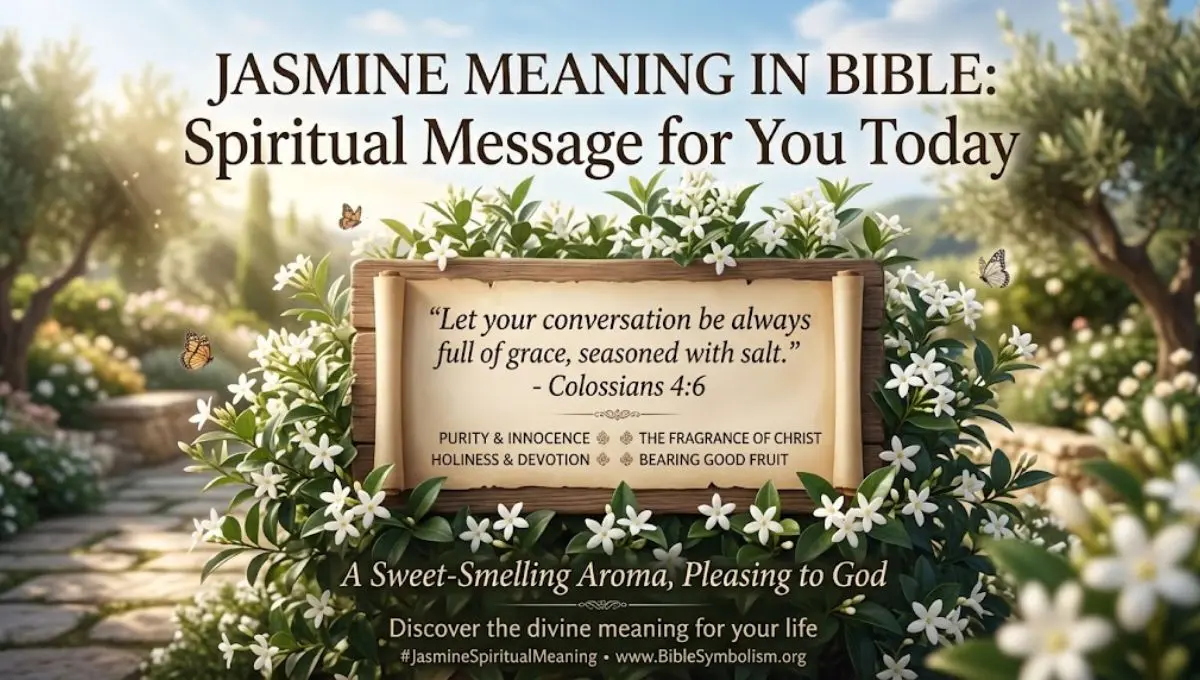
Have you ever caught the scent of jasmine drifting through the evening air and wondered if it carries a deeper message? The Jasmine Meaning in Bible is symbolic rather than textual, because Scripture never names the flower directly. Even so, its white petals and sweet fragrance echo biblical themes of purity, prayer, and grace.
This guide explains the biblical symbolism of jasmine, its Persian and Hebrew name origin, and what the name means in Christianity, Islam, and dreams. You will also find related Bible verses about fragrant flowers, plus simple steps to apply the Jasmine Meaning in Bible to your daily faith. Each section is clear, honest, and easy to follow.
Biblical Meaning of Jasmine — What the Scripture Tells Us
The jasmine meaning in Bible is mostly symbolic. Scripture does not name the flower directly. But it often uses fragrance to picture holiness, love, and God’s nearness.
Song of Solomon 2:1 mentions the rose of Sharon and the lily of the valleys. Song of Solomon 4:10-14 lists spices and perfumes in a garden. Readers often place jasmine in this same family of sweet-smelling, white-blooming plants.
Is Jasmine in the Bible? Here’s the Truth
No, jasmine is not named in the Bible. Any claim that a verse says “jasmine” is not supported by the text.
Jasmine does grow in warm Mediterranean and Middle Eastern lands. But fitting the setting is not the same as being mentioned. Symbolism here is interpretation, not direct teaching.
What Is the Real Meaning of Jasmine?
Any study of the jasmine meaning in Bible starts with the name. Jasmine comes from the Persian word yasmin. It means “jasmine flower” and is often explained as “fragrant flower” or “gift from God.” Name sites such as Behind the Name trace it from Persian into Arabic and Hebrew.
Key Symbolic Meanings of Jasmine:
- Purity: white petals suggest a clean heart.
- Grace: its beauty feels freely given.
- Hope: it blooms again and again.
- Devotion: its scent is linked with prayer and worship.
- Love: many cultures use it as a sign of tender affection.
Jasmine Name Origin, History, and Cultural Significance
Jasmine began as a Persian plant name. It traveled into Arabic, then Hebrew, and reached English around the 16th century. Today, forms like Yasmin, Yasmina, and Jessamine are common.
It rose sharply in the West after Disney’s Aladdin in 1992.
Jasmine Meaning in Bible Catholic
In Catholic and wider Christian art, white flowers often point to the Virgin Mary. Jasmine is sometimes linked to her gentleness and purity. This is tradition and devotion, not official doctrine.
So the Catholic view of the jasmine meaning in Bible is about symbolism. It is not a verse-based teaching.
Why Does Jasmine Mean “Gift from God”?

The phrase comes from the name’s meaning in Persian-rooted baby-name traditions. It is a loving explanation, not a biblical definition. Many parents choose it because they see a child as a blessing.
Scripture does teach that children and good things are gifts from God (Psalm 127:3, James 1:17). So the idea fits the Bible’s heart even though the flower is not named.
Read Also: Biblical Meaning of the Name Evelyn: Light
Jasmine Meaning in Bible KJV
The King James Version does not use the word jasmine. It does mention fragrant plants like spikenard, myrrh, cinnamon, and the lily. Reading the jasmine meaning in Bible KJV therefore means reading the theme of fragrance, not a single word.
| KJV Plant or Flower | Where It Appears | Common Symbolism |
| Rose of Sharon | Song of Solomon 2:1 | Beauty, the beloved |
| Lily | Song of Solomon 2:1; Hosea 14:5 | Purity, renewal |
| Spikenard | Song of Solomon 4:13-14 | Costly devotion |
| Myrrh | Song of Solomon 4:14 | Sacrifice, honor |
Jasmine Meaning in Hebrew — The Deeper Linguistic Root
In modern Hebrew, jasmine is yasmin (יַסְמִין). Language teachers note it came from Persian and was not an ancient Hebrew word. It became a girl’s name in Israel in the 20th century.
Red Jasmine Meaning in Bible
Red jasmine is not found in Scripture, so any jasmine meaning in Bible sense is personal. Red flowers in the Bible, such as the rose imagery, often connect to love or sacrifice. Some people apply that idea to red jasmine as a personal reflection.
What Does the Name Jasmine Mean in Christianity?
In Christian use, the jasmine meaning in Bible tradition stands for beauty, purity, and grace. Parents often pair it with the idea of a child as a gift from God.
What Jasmine Represents in Christian Faith:
- A pure heart: the white bloom.
- Faith in dark seasons: it releases strong scent at night.
- A godly influence: its fragrance carries far.
- Spiritual growth: the vine climbs upward.
Spiritual Meaning of the Name Jasmine
Spiritually, the jasmine meaning in Bible context suggests warmth, beauty, and quiet strength. Aromatherapy and prayer traditions also link jasmine scent with calm.
Paul wrote that believers are the “aroma of Christ” (2 Corinthians 2:15). That verse is a lovely lens for the flower’s message.
Jasmine Meaning in Islam
In Islam, Yasmin is a beloved name for girls. It means jasmine flower in Persian and Arabic. Many Muslims connect it with beauty and the gardens of paradise.
Biblical Interpretations of Jasmine in Dreams
The Bible records meaningful dreams, such as Joseph’s in Genesis. Yet it gives no dream dictionary for flowers, so the jasmine meaning in Bible dreams stays a humble reflection. Blooming jasmine may suggest peace. Wilting jasmine may call you back to prayer. Test every impression with Scripture and wise counsel.
Spiritual Significance and Symbolism of Jasmine
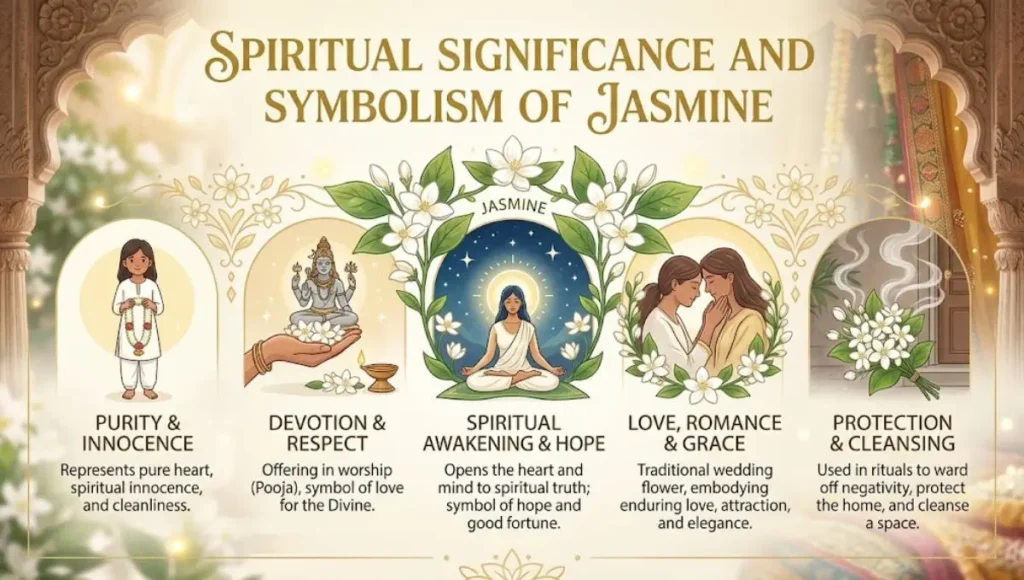
Jasmine is a small flower with a big scent. As a climbing vine, it pictures leaning on God and community.
Read Also: Biblical Meaning of the Name Cameron: Origin & Spiritual
Step-by-Step: How to Apply Jasmine’s Spiritual Meaning to Your Faith Life
Here is how to live out the jasmine meaning in Bible study daily:
- Reflect: ask what it means to be called a gift.
- Trust: believe God grows you in hard seasons.
- Guard your heart: choose honesty and integrity.
- Be a fragrance: bring peace into every room.
- Reach upward: pray, read Scripture, and join a church family.
Jasmine Name Personality — What Faith and Culture Say
Name guides describe Jasmines as warm, creative, and strong. These are general impressions, not facts.
In Christian terms, the jasmine meaning in Bible traits echo the fruit of the Spirit in Galatians 5:22-23.
Bible Verses About Flowers That Relate to Jasmine’s Symbolism
These verses support the jasmine meaning in Bible themes:
- Song of Solomon 2:1: the rose of Sharon and the lily of the valleys.
- Matthew 6:28-29: consider the lilies; God clothes them beautifully.
- Isaiah 35:1: the desert will blossom.
- 2 Corinthians 2:15: believers are Christ’s fragrance to God.
Read Also: The Terrific Biblical Meaning of the Name ANTHONY
Practical Lessons and Faith Insights from Jasmine’s Meaning
The jasmine meaning in Bible lessons are simple:
- You are valued. God made you on purpose.
- Purity of heart still matters.
- Small acts of kindness carry far.
- You grow best when you stay connected to God and others.
Frequently Asked Questions
What Bible verse is associated with the name Jasmine?
No verse names Jasmine. Song of Solomon 2:1 and 2 Corinthians 2:15 are often used for its flower and fragrance symbolism.
What is the meaning of white jasmine in the Bible?
The Bible does not mention white jasmine. In Christian tradition, it symbolizes purity and grace.
What is the biblical meaning of Jasmine in the KJV Bible?
The KJV never uses the word jasmine, so the jasmine meaning in Bible KJV is thematic. Its meaning is drawn from the Bible’s fragrant-flower imagery.
What does red jasmine mean in the Bible?
Red jasmine is not in Scripture. Any meaning, such as love or sacrifice, is personal interpretation.
What is the Catholic meaning of the name Jasmine?
It is a floral name linked by tradition to Mary’s purity. It is not an official church teaching.
Is Jasmine mentioned in the Bible?
No. The jasmine meaning in Bible is symbolic because the Bible never names the flower.
What is the meaning of the name Jasmine?
It is Persian in origin and means “jasmine flower” or “gift from God.”
What is the meaning of Jasmine in Hebrew?
In modern Hebrew, yasmin simply means the jasmine flower. It was borrowed from Persian.
Conclusion
The jasmine meaning in Bible is symbolic, not textual. The flower is never named in Scripture. Yet its purity, scent, and grace match many biblical themes.
Use this jasmine meaning in Bible study as gentle inspiration. Keep Scripture as your anchor and let the flower remind you that you are loved. In quiet seasons, your life can still carry a sweet fragrance of faith.

Welcome to Namemeaningtrend! I’m Abdul Mannan, your AI-powered SEO wordsmith, turning humor, creativity, and 7 years of experience as a content writer into digital magic. I craft viral Names and NamesMeaning lines that make every post shine.