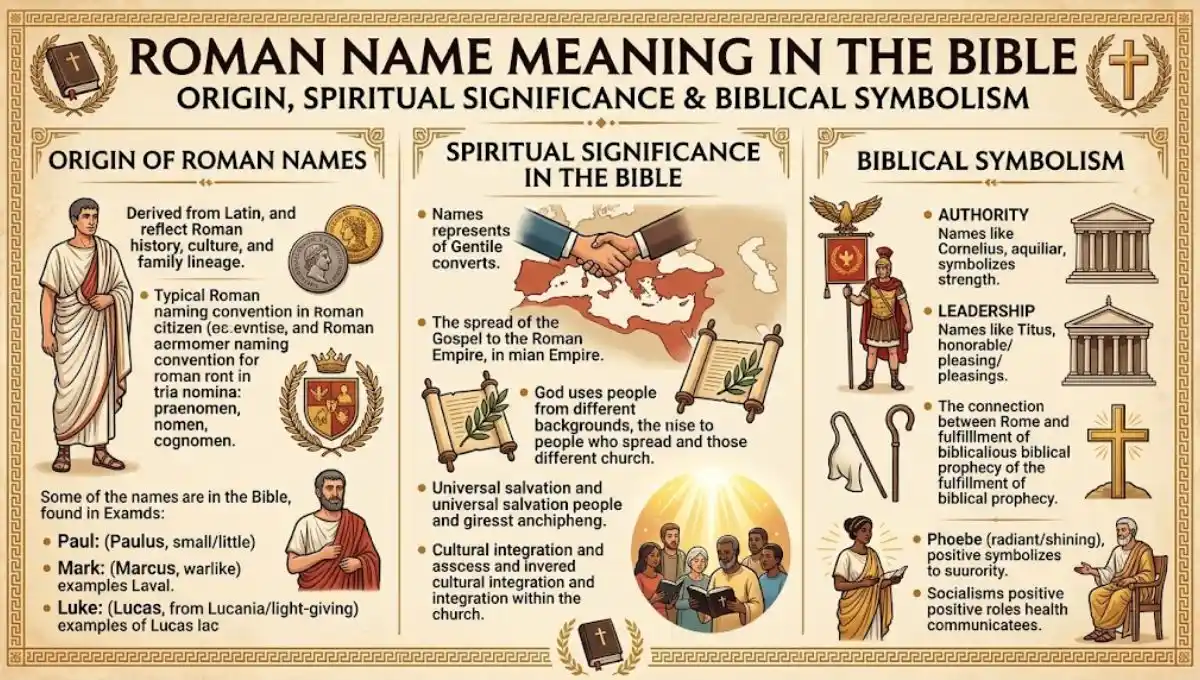
The Roman name meaning in the Bible blends history, faith, language, and spiritual interpretation into one powerful identity. People searching for this name aren’t just curious about etymology; they want to know if Roman is a biblical name, and what deeper spiritual truth it carries within a faith context.
Although Roman never appears as a direct biblical character, its roots run deep through the Roman Empire’s presence in Scripture, the rise of early Christianity, and the rapid spread of the Gospel across nations. This connection gives the name a symbolic weight far beyond simple language origin.
In this article, we’ll explore the origin of the name Roman, its biblical association, cultural evolution, Hebrew interpretation, and the Roman name meaning in the Bible for today’s Christian identity.
What Is the True Meaning of the Name Roman in the Bible?
The core Roman name meaning in the Bible centers on identity, status, and redemption rather than a single Old Testament figure. It describes “a citizen of Rome,” a title that shifted from representing worldly power to representing bold, unashamed faith once early believers embraced the Gospel.
Origin and Historical Background of the Name Roman
The name traces back to the Latin word Romanus, meaning “of Rome.” Legend credits the city’s founding to Romulus around 753 BC. Over centuries, Roman citizenship became a legal status offering protection from harsh punishment and the right to appeal directly to the emperor, a privilege the Apostle Paul later used to advance the Gospel.
Is Roman a Biblical Name or Derived from Roman Empire?
Roman is not a personal name given to an individual in Scripture. Instead, it’s an ethnonym, a term tied to a nation and its people that became woven into New Testament history through Rome’s dominance during the Pax Romana.
- Not found as a standalone character name in the Old Testament
- Appears as a legal and cultural identity in Acts and the Epistles
- Became the title of a full New Testament book: Romans
Roman Name Meaning in the Bible Boy
For a boy, the name signals strength, leadership, and steadfast faith. Many Christian parents choose it because it links a son to Paul’s missionary courage and the early church’s resilience, without being tied to a single negative biblical figure.
Roman Name Meaning in Hebrew, Greek, and Early Christian Context
The Hebrew Perspective: Rom (רם)
A separate Hebrew root, Rom, means “high,” “exalted,” or “lifted up” the same root behind names like Abram. This gives the name a spiritual layer beyond its Latin origin.
The Greek Context: Rōmaios (Ῥωμαῖος)
In New Testament Greek, Rōmaios referred to someone with full Roman legal standing, appearing over a dozen times in books like Acts, often in connection with citizenship rights.
The Early Christian Transformation
Early believers reshaped the term from a symbol of imperial fear into a badge of faith, worn by centurions, slaves, and nobility alike who chose Christ over Caesar.
Deep Spiritual Meaning Behind the Name Roman
1. Chosen for a Divine Purpose
God used Roman roads, law, and infrastructure to spread the Gospel, a reminder that secular systems can serve sacred purposes.
2. Exalted and Lifted Up by Grace
Drawing from the Hebrew root, the name reflects a life lifted from lowliness into a high spiritual calling.
3. Unashamed Spiritual Boldness
Romans 1:16 “I am not ashamed of the gospel” frames the name as a call to confident, public faith.
Biblical Personality Traits Associated With the Name Roman
- Disciplined and structured in thought and action
- Bold under pressure, like Paul before Roman authorities
- Protective and loyal, similar to the centurion of Capernaum
- Steady in leadership, unmoved by cultural opposition
Roman Name in the Bible: Historical References and Interpretation
Roman citizenship appears repeatedly as a protective tool in the New Testament. Paul invoked it in Philippi (Acts 16) and Jerusalem (Acts 22:25), and later appealed to Caesar (Acts 25:11), securing his path to preach in Rome itself.
Role of Romans in the Bible and Early Christianity
Romans in Scripture aren’t portrayed as one-dimensional villains. A Roman centurion recognized Jesus’s innocence at the cross (Luke 23:47), and Cornelius, another centurion, became a pivotal Gentile convert in Acts 10.
Read Also: Biblical Meaning of the Name Cameron: Origin & Spiritual
Roman Soldiers, Empire, and Their Biblical Significance
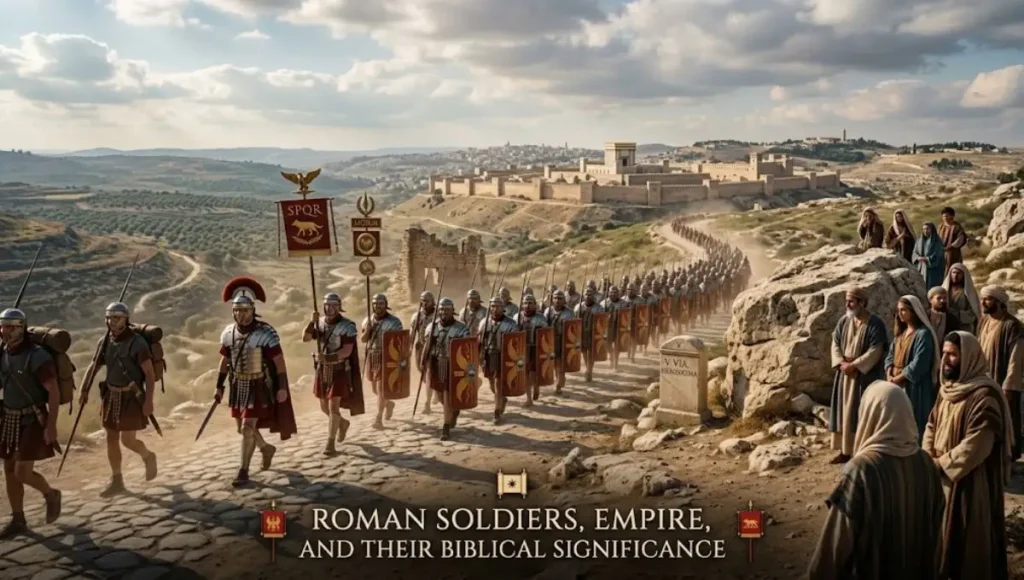
| Roman Element | Biblical/Spiritual Significance |
| Centurion of Capernaum | Model of exceptional faith (Matthew 8) |
| Roman armor | Basis for the Armor of God (Ephesians 6) |
| Roman legal system | Protected Paul’s ministry and travels |
| Roman roads | Enabled rapid spread of the Gospel |
What the Bible Says About Rome and Its Symbolism
Daniel’s vision of a statue with iron legs (Daniel 2) is widely interpreted as representing Rome, a kingdom strong as iron, later crushed by God’s eternal kingdom.
Revelation later uses coded imagery, referencing a city on seven hills, widely understood as Rome.
Symbolism of Roman Name in Christianity and Faith
The name symbolizes dual citizenship living fully in the world while remaining anchored in heaven, as Paul describes in Philippians 3:20.It also reflects order and structural faith, much like Rome’s famous roads and aqueducts.
Roman Empire Symbolism in Biblical Prophecy
Daniel 7’s fourth beast, with “great iron teeth,” is commonly linked to Roman military dominance. Yet prophecy consistently points past the empire’s power to God’s ultimate sovereignty over history.
Strength, Authority, and Leadership Meaning of Roman Name
The Power of Boundaries and Execution
Historically, a Roman was someone skilled at building systems and enforcing order traits that translate into strong, structured leadership today.
Spiritual Pillars of Strength
Echoing Psalm 18:2, the name carries an image of God as rock and fortress, suited to someone who becomes a steady pillar for others.
Psychological Meaning of the Name Roman (Power & Identity)
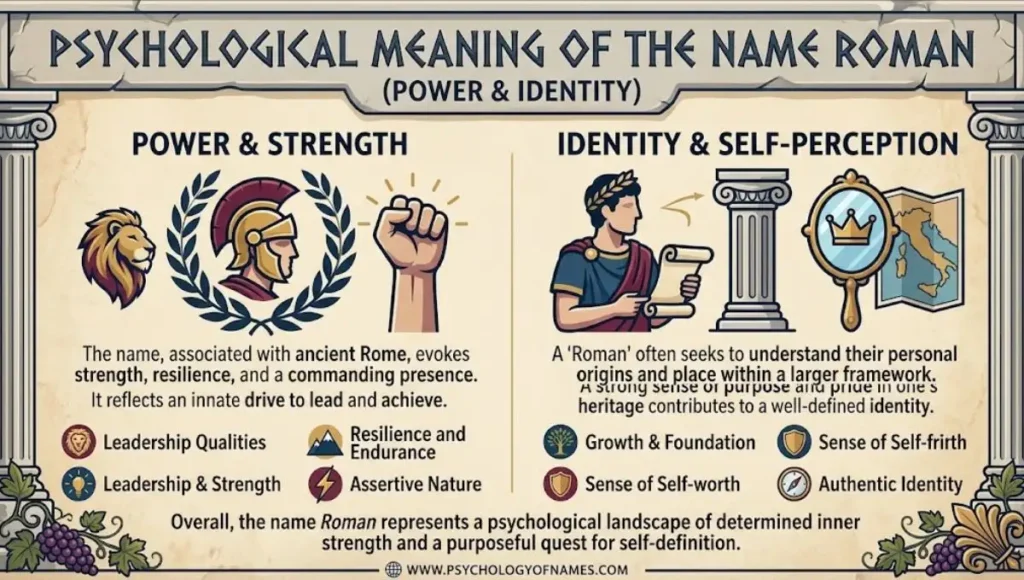
People named Roman are often associated with resilience, executive presence, and calm decision-making under pressure traits that, paired with humility, translate into protective rather than domineering leadership.
Read Also: The Terrific Biblical Meaning of the Name ANTHONY
Roman Name Meaning in Different Cultures and Languages
The Slavic Regions: Roman
Popular among Slavic nobility and saints, connoting honor and dependability.
The Spanish-Speaking World: Román
Carries a passionate, artistic flair alongside classic Latin nobility.
The French Landscape: Romain
Evokes intellectual depth and refined strength.
Is the Name Roman Suitable for Christian Parents?
Yes. It connects a child to Paul’s missionary legacy and early martyrs’ courage, without being tied to a negative biblical figure making it a historically rich, faith-affirming choice.
Spiritual Strengths and Challenges of the Name Roman
- Strength: Natural leadership and steady faith under pressure
- Strength: Connection to boldness and gospel confidence
- Challenge: Risk of pride if strength isn’t paired with humility
- Challenge: Balancing worldly ambition with spiritual purpose
Roman Name Meaning in the Bible Catholic
In Catholic tradition, several saints have borne the name Roman (or Romanus), often venerated for martyrdom and steadfast devotion, reinforcing the name’s association with sacrifice and faith.
Popularity of the Name Roman in Modern Times
Roman has climbed into the Top 50 boys’ names across the US, Canada, and parts of Europe, boosted by public figures and its blend of ancient depth with modern simplicity.
Roman Name in Today’s Christian Identity and Faith Perspective
Choosing this name today reflects an intentional statement: stepping boldly into modern, secular spaces while carrying an unashamed Christian identity.
Read Also: Tristan Name Meaning Bible: A Spiritual and Biblical Insight
Key Lessons Believers Can Learn from Roman History in the Bible
1. God is the Ultimate Director of History
Rome’s infrastructure unintentionally served God’s plan to spread the Gospel worldwide.
2. True Citizenship is a Matter of the Heart
Paul modeled respecting earthly law while holding ultimate loyalty to God’s kingdom.
3. Redemptive Transformation is Available to All
An identity once linked to persecution became one of faith, proving no name or nation is beyond redemption.
Frequently Asked Questions
What is the meaning of Roman in the Bible for a girl?
Roman is traditionally a boy’s name, but when used for girls, it retains the same meaning of strength, citizenship, and exalted faith.
What is the spiritual meaning of the name Roman?
It signifies being exalted by grace and called to live boldly for God within a secular world.
What is the meaning of Roman in Islam?
Roman isn’t an Islamic name, but it’s permissible; it simply means “from Rome” and carries no negative meaning in Islamic naming traditions.
What is the meaning of Roman in the Bible for a boy?
For boys, it represents strength, leadership, and the courage to live an unashamed faith, echoing Paul’s example.
What is the meaning of Roman in the KJV Bible?
The KJV uses “Roman” to describe citizenship status, notably in Acts 22:27, highlighting legal rights tied to the empire.
What is the Catholic meaning of the name Roman?
Catholic tradition links the name to sainthood and martyrdom, symbolizing steadfast devotion under persecution.
What does the name Roman mean?
It means “citizen of Rome” or “man from Rome,” derived from the Latin word Romanus.
What is the Hebrew meaning of the name Roman?
A separate Hebrew root, Rom, means “exalted” or “lifted up,” adding a spiritual dimension distinct from the Latin origin.
Conclusion
The Roman name meaning in the Bible blends history, language, and faith into one layered identity. Though not a personal biblical name, its ties to Paul’s citizenship, early church courage, and prophetic symbolism give it lasting spiritual weight for modern families.
Choosing this name today connects a child to a legacy of boldness, structure, and redemption proof that even names born from worldly power can be reshaped into symbols of unshakeable faith.

Welcome to Namemeaningtrend! I’m Abdul Mannan, your AI-powered SEO wordsmith, turning humor, creativity, and 7 years of experience as a content writer into digital magic. I craft viral Names and NamesMeaning lines that make every post shine.